
Nine Pedals and a Narrow Width
Mashroo has been woven in Kutch and Patan for generations. It is a satin weave with silk on one face and cotton on the other, made for communities who believed silk should not touch the skin.
In Saurashtra and Kachchh, women stitched mashroo blouses, skirts and cholis. Patel, Jain, Rabari and Ahir communities each wore their own designs and colours, and mashroo was a favourite for weddings and festivals. Ikat mashroo was once woven in Kutch too, but it has stopped for lack of knowledge and fair returns.
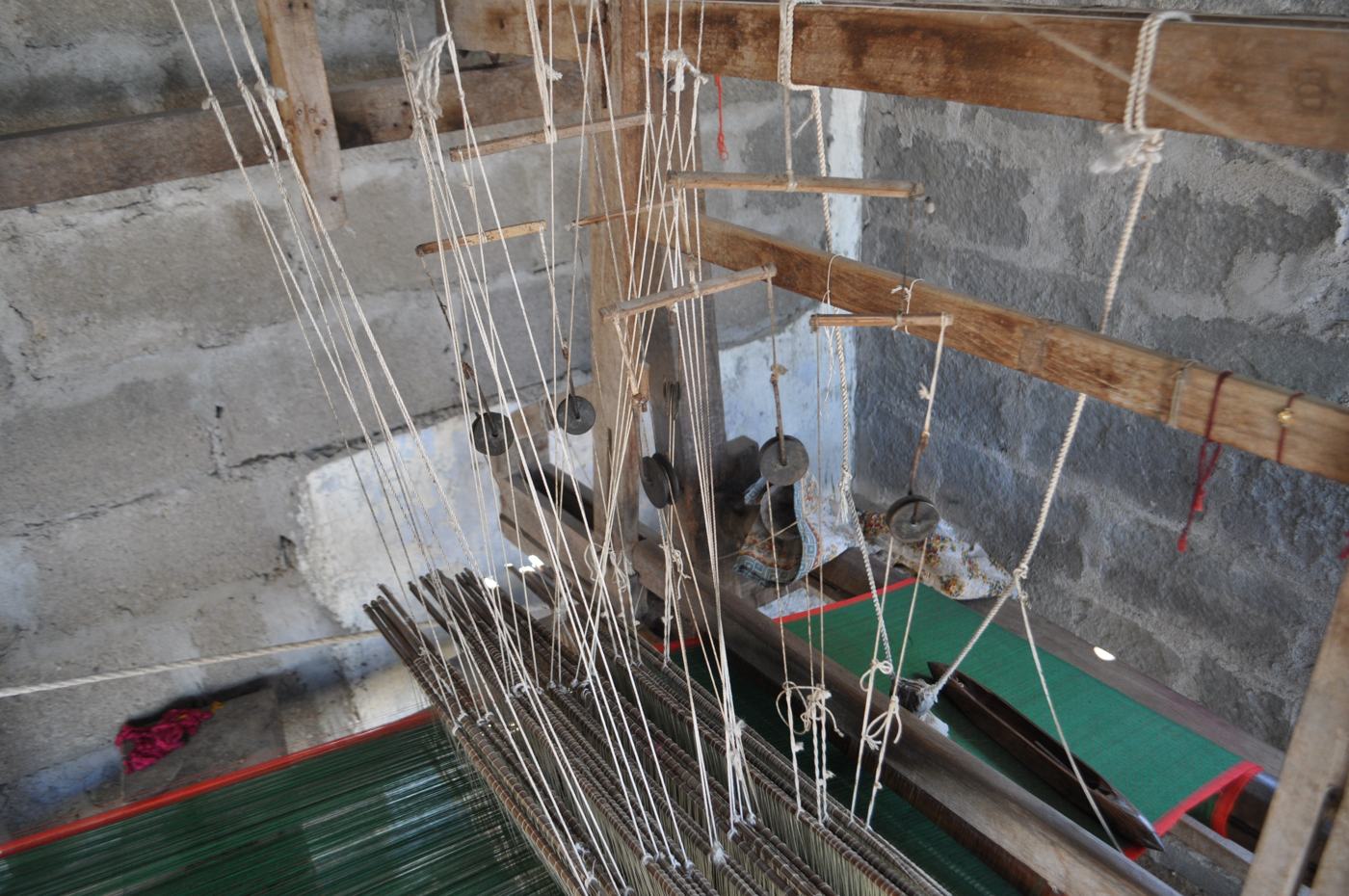
Mashroo is harder to weave than most cloth. It needs at least 9 pedals, and difficult designs need 11 to 13. That is why it is woven only 22 inches wide in Kutch; plain mashroo in 33-inch width is made by just one or two families. Mill-made rayon look-alikes from Surat sell for far less.
In Kutch the Maheshwari community still weaves mashroo, but most weavers are in their sixties and young people are choosing other work. Without new interest, the craft could disappear within a decade.
Design can change that. Designers who can work with short widths, for home décor or saree blouses, can build a new range with the weavers. For now, we buy the fabric weavers bring to our office so their families keep an income.